
Hair restoration
Hair loss and hair restoration in Bristol
Hair loss is not one condition, and there is no single treatment that is right for everyone. At The Hampton Clinic we take a foundation first approach: understand what is happening, preserve and support the hair you still have, and only then consider what genuinely needs replacing.

Plate 02 — Control the fire before you plant
4.9of 5
Google rating across the practice
297reviews
Verified patient reviews on Google
2014since
Working with hair loss patients
60minutes
A consultation, unhurried and complimentary
Hair loss is different for everyone
Hair loss can affect men and women at different stages of life and in very different ways. It may present as any of the following.
- Gradual thinning or loss of density
- Increased or sudden shedding
- A receding hairline
- Thinning through the crown
- Widening of the parting
- Diffuse thinning across the scalp
- Localised or patchy hair loss
- Changes in scalp health or hair quality
Genetics may play a role, but hormonal changes, stress, nutrition, general health, medication, lifestyle and scalp conditions can also contribute. Two people experiencing what appears to be similar hair loss may therefore require very different approaches. This is why assessment comes before treatment.
Restore the foundation first
At The Hampton Clinic we believe hair restoration should begin by protecting and supporting the hair you already have.
Think of the scalp like a forest. If a wildfire is spreading, planting new trees is not the first priority. First you control the fire. Then you assess the damage, restore the environment and protect what can still be saved. Only after that do you determine what genuinely needs replacing.
We apply the same principle to hair restoration. Hair that appears thin or weak is not necessarily hair that has been permanently lost. In some forms of progressive hair loss, follicles can gradually become smaller and produce increasingly finer and shorter hairs. Where follicles remain viable, there may still be an opportunity to support them.
That is why our priority is to understand what may be contributing to the hair loss, improve the environment in which the hair grows, and give existing follicles the best opportunity to respond.
Stabilise. Restore. Reassess.
1. Stabilise
The first priority is to understand the pattern and progression of your hair loss and identify factors that may be contributing to it. This allows us to develop an individual strategy rather than simply treating the visible thinning.
2. Restore
Where follicles remain viable and suitable for treatment, we focus on supporting the existing hair and creating a healthier environment for growth through a structured, personalised programme. The aim is to preserve and strengthen as much of your existing hair as reasonably possible.
3. Reassess
Hair restoration takes time. After giving your hair an appropriate opportunity to respond, we reassess your progress and determine what, if anything, should happen next. For some patients, particularly where hair loss is identified and addressed earlier, non surgical treatment may provide sufficient improvement without the need for surgical intervention. For others, additional treatment may form part of the longer term plan.
Your hair and scalp consultation
Every hair restoration journey at The Hampton Clinic begins with a detailed consultation and hair and scalp assessment. Your consultation is not simply an appointment to choose a treatment. We take time to understand when you first noticed changes, how the loss or shedding has progressed, the pattern of thinning, the condition of your scalp and existing hair, relevant health, lifestyle and family history, previous treatments, and your own concerns and expectations.
From there we can discuss what may be contributing to your hair loss, what may realistically be improved, and which next steps may be appropriate. Where further medical investigation or referral is advisable, this may be recommended before treatment begins.
Non surgical hair restoration
Non surgical hair restoration forms the foundation of our approach. Rather than starting with a predetermined treatment, we develop an individual programme based on the findings of your consultation and hair and scalp assessment.
The aim is to address the factors that may be contributing to your hair loss, support the scalp environment, and give viable follicles the best opportunity to produce healthier, stronger hair. Your programme is determined by what your hair needs, not by a standard treatment package. Progress is monitored throughout, allowing us to reassess how your hair is responding and adapt the approach where appropriate.
Why early assessment matters
Hair loss does not necessarily mean that every follicle within a thinning area has been permanently lost. In some forms of progressive hair loss, follicles gradually miniaturise and begin producing finer, shorter and less visible hairs.
This is one reason early assessment can be valuable. Where follicles remain viable and responsive, there may be an opportunity to support the existing hair before further loss occurs. Where meaningful natural recovery is no longer possible, other options can then be considered.
Where does hair transplantation fit?
For some patients, restoring and supporting the existing hair may be enough. For others, areas of permanent hair loss may still benefit from transplantation.
At The Hampton Clinic, transplantation is considered after the foundation has been addressed, allowing us to focus surgery on what genuinely needs replacing while preserving the donor area wherever possible. For suitable patients we offer FUE and DHI hair transplantation.
Hair loss in men and women
Hair loss affects both men and women, but the way it develops and the factors contributing to it can be very different.
Hair loss in men
Male pattern hair loss commonly presents as progressive recession around the hairline and temples, or thinning through the crown. Genetic and hormonal factors frequently play a role, but not every case of male hair loss is male pattern hair loss. Increased shedding, scalp conditions and other contributing factors may also need to be considered.
Hair loss in women
Hair loss in women may present very differently, including increased shedding, loss of volume, widening of the parting or more generalised thinning. Hormonal changes, menopause, postpartum shedding, stress, nutritional factors, genetics, general health and scalp conditions may all warrant consideration. Understanding what is contributing to the change is therefore particularly important before deciding on treatment.
The journey
Successful restoration is
doing the right things
in the right order.
-
01
Conversation
Every journey begins with a relaxed, no obligation consultation. We take the time to understand your concerns, your goals, and to answer any questions you have.
-
02
Assessment
We assess your hair and scalp under the microscope to gain a clear understanding of your current situation and determine the most appropriate approach for your individual needs.
-
03
Foundation
For many patients the journey begins with the foundation phase, a carefully planned stage designed to create the strongest possible environment before introducing additional therapies where appropriate.
-
04
Your programme
No two patients are the same. Your programme is tailored specifically to your hair, your goals and your progress throughout the journey.
-
05
Ongoing support
Hair restoration is a journey, not a single appointment. We review your progress, support you throughout your programme, and adapt our recommendations as your needs evolve.
Patient records
Change measured
against a baseline.
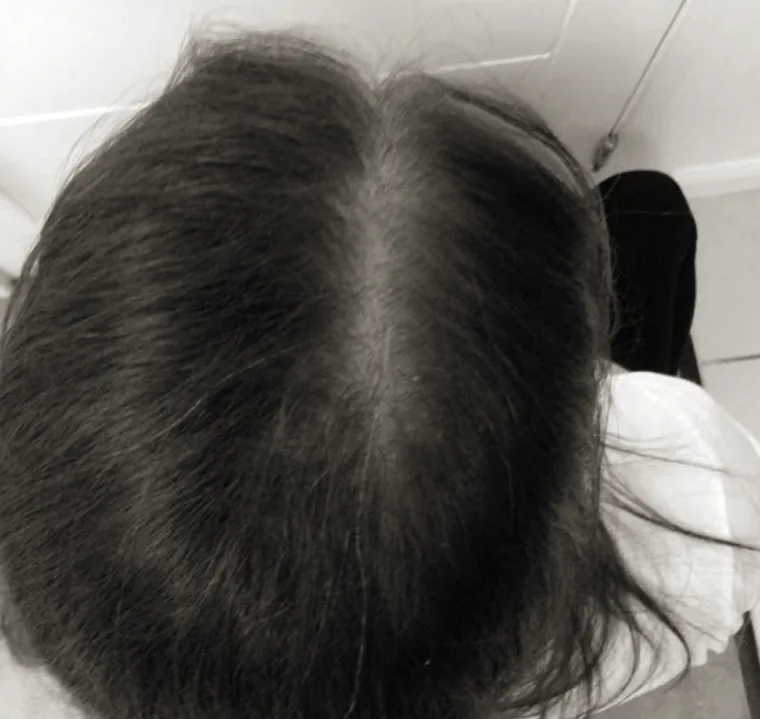
Microscopic images are taken on the first visit. Progress is then formally reviewed every 2 months, so what changed is compared against a record rather than against recollection. Drag any slider to compare.
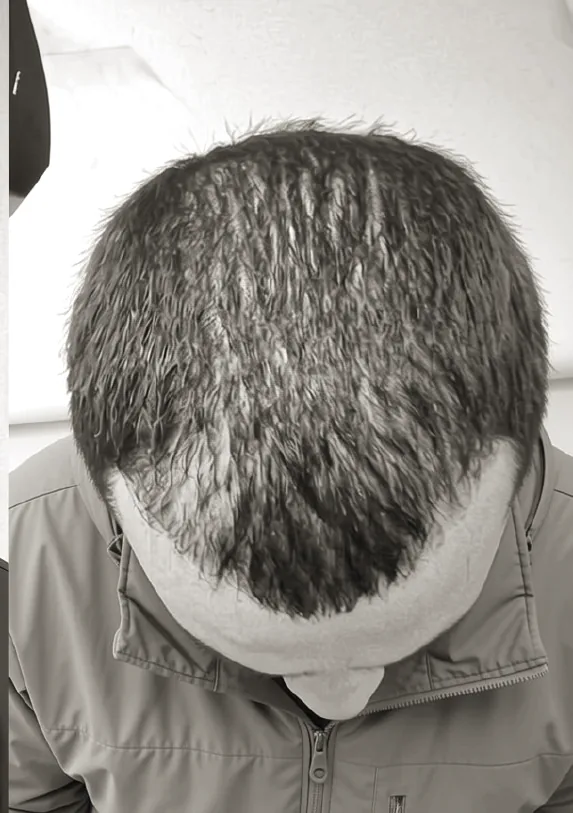 After
After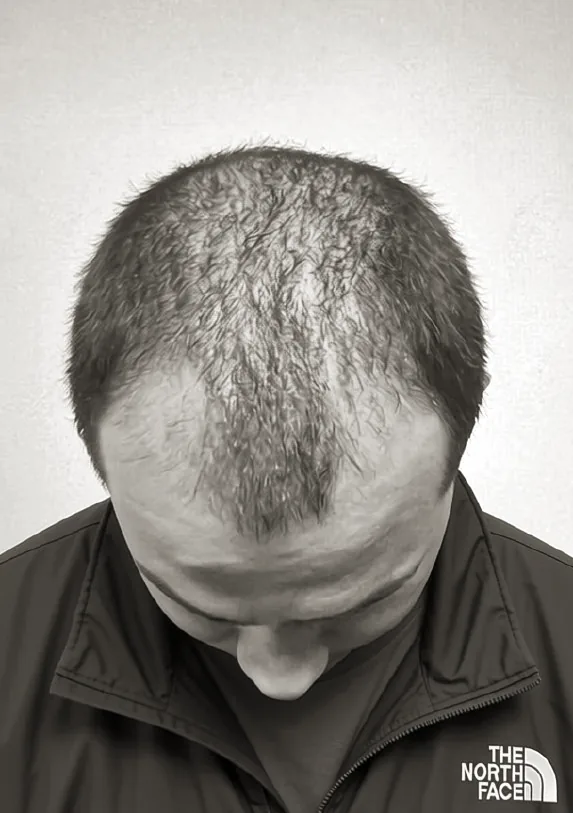 Before
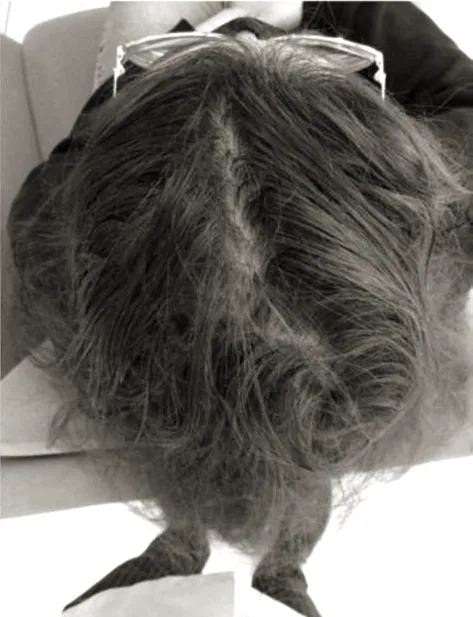 After
After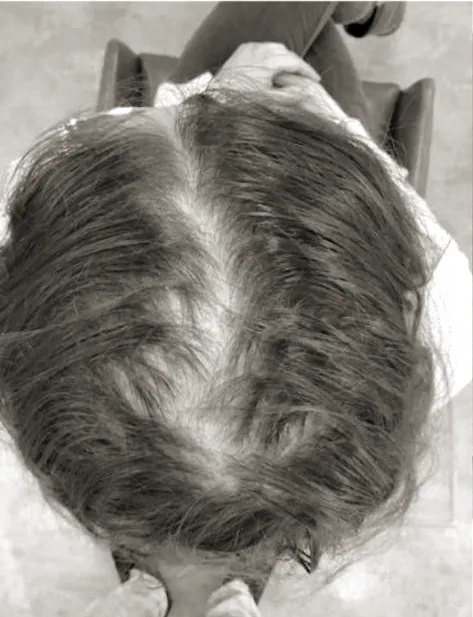 Before
 After
After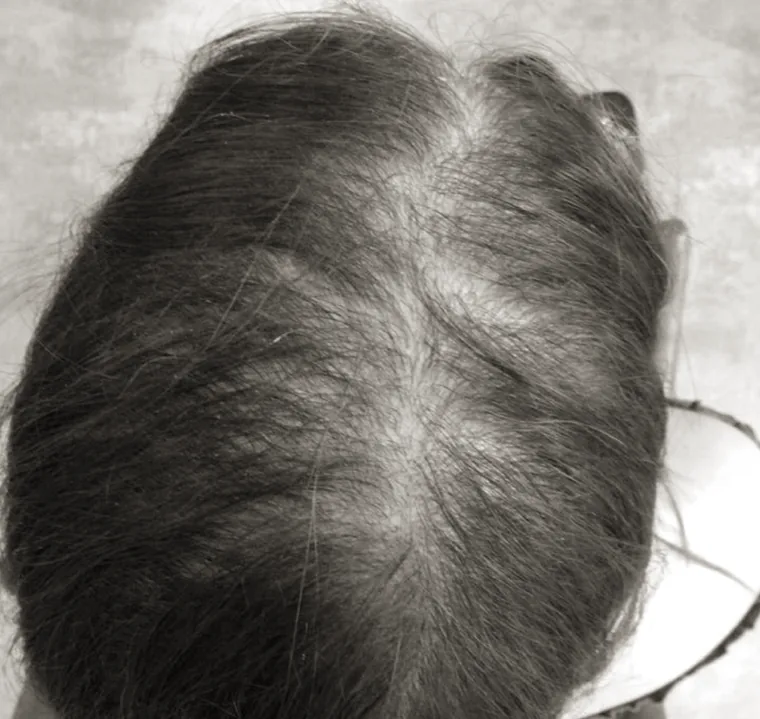 Before
Photographs are of our own patients and published with their consent. Hair restoration is gradual and results vary between individuals. Nothing here is a guarantee of outcome, and suitability is established at consultation first.
${html}${esc(label)}
I have been visiting the Hampton Clinic for ten years and there is absolutely nowhere else I would go for my treatments. Customers are always welcomed by a warm, polite and efficient team who are experts in their field. Treatments are carried out in an extremely respectful and personal manner.Lindsey Berry
I have been coming here for a very long time for laser hair growth treatment. I originally knew Tarek from a previous clinic, and I have continued to trust him. It never feels rushed or clinical in a cold way. There is always good conversation, genuine care, and a real personal touch, which makes a big difference.
I am impressed, and learnt a lot at my hair loss consultation today at The Hampton Clinic Bristol. They explained everything, what is the cause of my thinning hair, and advised what I should use and take.
Always welcoming, staff very friendly and positive. I have been on numerous occasions and have always been treated respectfully. They keep you updated about your sessions by email and text, and you always get an aftercare email too.
Questions
Before
you book.
Do I need to know which treatment I need before booking?
No. Your consultation exists to help you understand what is happening to your hair. Our role is to assess your individual situation, answer your questions and explain which approach is appropriate for you. You need no prior knowledge before visiting us.
How much does a consultation cost?
Consultations are complimentary. We ask for a £25 holding fee to secure your appointment, which is fully refunded when you attend, or deducted from the cost of your programme if you choose to proceed.
How long does the consultation take?
Most consultations take approximately 45 to 60 minutes, which gives us time to understand your concerns, examine your hair and scalp under the microscope, and discuss the most appropriate options available to you.
Am I suitable for hair restoration treatment?
Suitability varies from person to person. The assessment establishes whether there is enough viable hair remaining to realistically work with. If Tarek does not believe treatment is appropriate or likely to benefit you, he will tell you rather than recommend treatment for the sake of treating you.
Will I be pressured into starting treatment?
No. Our consultations are designed to provide honest advice and help you make an informed decision. Whether you choose to proceed with treatment or not, we want every patient to leave feeling informed and confident they have been given honest advice.
When will I start seeing results?
Hair restoration is a gradual process and results vary between individuals. Microscopic images are taken at the beginning to establish a baseline, and progress is formally reviewed every 2 months so changes can be compared objectively rather than from memory.
How long does the programme take?
Every programme is personalised, so timescales vary depending on your individual needs and goals. During your consultation we explain what we recommend, why we recommend it, and what you can realistically expect.
What treatments do you offer?
We do not sell individual treatments. Depending on your assessment, your programme may draw on several approaches, including red light therapy, PRP, PRF, exosomes and, where appropriate, hair transplantation. Which of these apply, and in what order, is decided by your assessment rather than by a fixed package.
I have already tried other treatments. Can you still help?
Many of our patients come to us after trying other treatments without achieving the results they hoped for. Every situation is different, which is why we begin with a consultation to understand your history, assess your current situation and recommend the most appropriate way forward.
Where are hair transplants carried out?
Where a hair transplant is appropriate, procedures are carried out in Turkey with Acıbadem Kartal Hospital using DHI or FUE techniques depending on the individual case. Tarek personally accompanies patients to Turkey, providing continuity from the initial assessment and foundation stage through to the transplant itself.